Educational Attainment and Castle Country
Scott Smith, Regional Economist
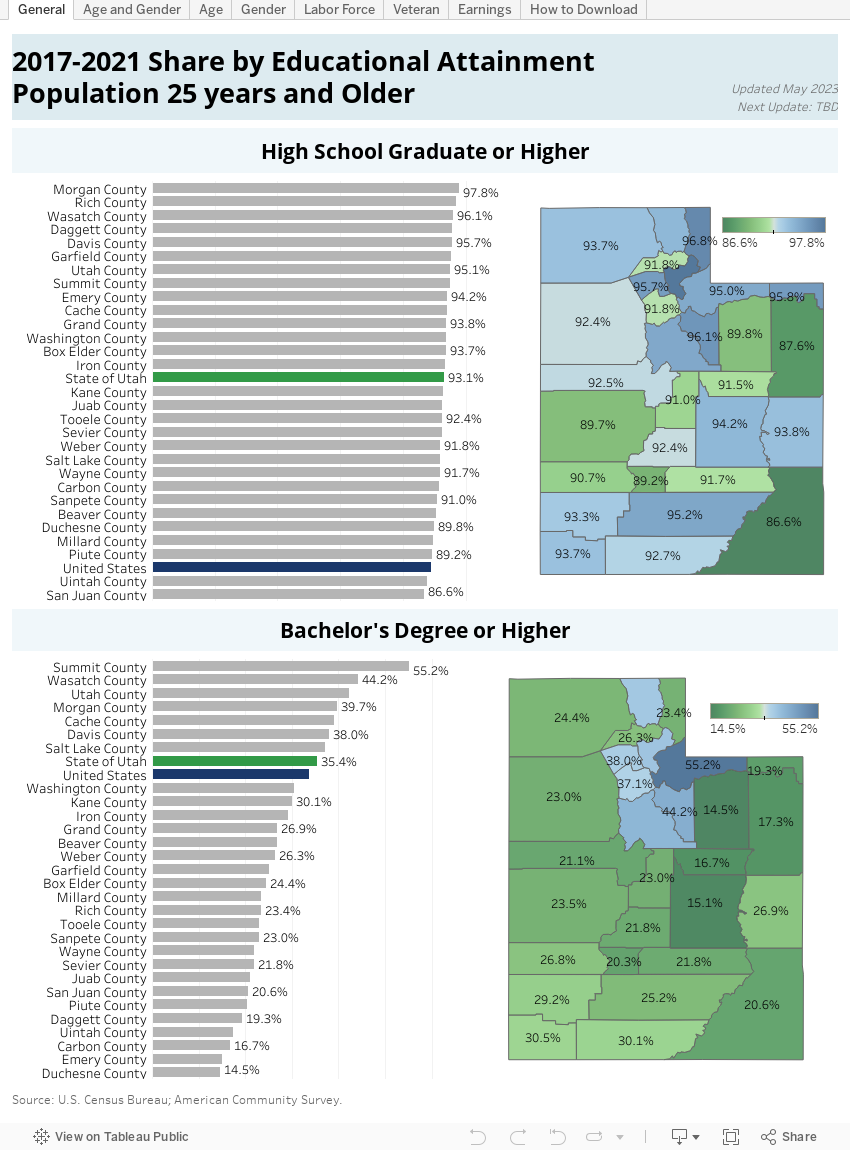
The ACS offers insights how the country’s workers of varying
educational attainment are distributed and how they are compensated.
As a point of reference, on average, U.S. workers who
possess less than a high school diploma earn $19,954. High school graduates
earn $27,868. Workers who have earned an associate’s degree or attended college
earn $33,988. College graduates earn $50,515. Recipients of graduate degrees earn
$66,944.
Nationally, men make more than women. For example, women
earn between 32 and 34 percent less than males with equivalent educational
background. Some, but not all, of this difference can be explained by a
significant proportion of women who choose part-time employment.
The ACS also maps the composition of the labor force by
highest educational attainment. Nationally, roughly 12 percent of the 25-year-and-older
population has not graduated from high school. Almost 27 percent of the
population has a high school diploma while 31 percent has advanced to an associate’s
degree or has attended university. A little more than 30 percent has a bachelor’s
degree.
What follows is a comparison of the population of the
counties in the Castle Country against the national statistics.
Carbon County
On average, Carbon County residents 25 years and older who
possess less than a high school diploma earn $21,726. High school graduates
earn $29,063. Workers who earned an associate’s degree or attended college
earned $29,136. College graduates earn $37,986, while recipients of
professional/graduate degrees make $54,704.
Carbon County workers earn 85 percent of the U.S. median.
Sorting by gender yields the statistic that Carbon County women earn 43 percent
of men’s wages, while the analogous U.S. figure is 72 percent. Women with less
educational attainment influence this figure. Women with no high school degree
earn 22 percent, 42 percent for high school graduates and 37 percent for associate’s
degrees.
High school graduates in Carbon County earn 104 percent of
the U.S. median for both sexes. Men earn 124 percent of the U.S. median for men,
while women earn only 78 percent of their respective median. Carbon County
residents who hold an associate’s degree or have attended college make 86
percent of the U.S. median. Men earn 122 percent of the U.S. median for men,
while women earn 65 percent of the U.S. median for women. College graduates in
Carbon County make 75 percent of the U.S. median for both sexes. Men earn 89
percent, while women earn 80 percent. Recipients of graduate degrees earn 82
percent of the U.S. median. Men make 87 percent of the median for men, while
women make 91 percent their respective median.
Carbon County residents differ from the national profile by
educational attainment. Almost 48 percent of the population hold an associate’s
degree or have attended college. In contrast, only 31 percent of the U.S.
population has the same level of attainment. Conversely, only 13 percent of the
county labor force holds at least a bachelor’s degree. The analogous figure for
the U.S. is 31 percent.
Emery County
Emery County residents who possess less than a high school
diploma earn on average $18,068. High school graduates earn $31,123. Workers
who earned an associate’s degree or attended college earn $32,891. College
graduates earn $45,625, while recipients of professional/graduate degrees make $45,682.
In total, women earn 35 percent of men’s wages, while the
analogous U.S. figure is 72 percent. Only women with graduate degrees approach
the national median. Emery County women with no high school diploma earn 34 percent,
41 percent for high school graduates and 28 percent for women with associate’s
degrees. Women with bachelor’s degrees earn 49 percent of the male counterparts’
income.
The effects of mining employment are apparent in the income by
gender statistics. Emery County workers make 94 percent of the U.S. aggregate
median. Workers with less than a high school education earn 91 percent of the
aggregate median. Men earn a 123 percent of the U.S. median for men, while
women earn 62 percent of the U.S. median for women. Emery County high school
graduates earn 112 percent of the U.S. median for both sexes. Men earn 127
percent of the U.S. median for men, while women earn only 78 percent of their
respective median. Emery County residents who hold an associate’s degree or
have attended college make 97 percent of the U.S. median. Men earn 125 percent
of the U.S. median for men, while women earn 50 percent of the U.S. median for
women. College graduates in Emery County make 90 percent of the U.S. median for
both sexes. Men earn 92 percent, while women earn 65 percent. Recipients of
graduate degrees earn 68 percent of the U.S. median. Men make 73 percent of the
median for men while women make 72 percent their respective median.
Emery County residents differ from the national profile by
educational attainment. Almost 48 percent of the population hold an associate’s
degree or have attended college. In contrast, only 31 percent of the U.S.
population has the same level of attainment. Conversely, only 11 percent of the
county labor force holds at least a bachelor’s degree. The analogous figure for
the U.S. is 31 percent.